 Why I Quit Chasing Monster Parlays and Actually Started WinningMay 22 at 04:16 PM•
 How I Stopped Chasing Losses and Started Actually Winning at Sports BettingMay 21 at 09:46 AM•
 Why I Started Tracking My Bet Slips Like a Business ExpenseMay 21 at 09:31 AM•
 App, Mobisite, or Desktop: Which Access Method Actually Changes How You Bet on HollywoodbetsApr 17 at 08:59 AM•
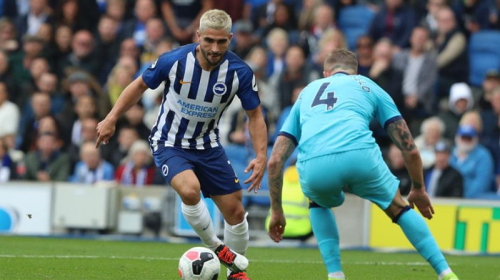 Top 7 Best Betting Strategy for Football SuccessApr 13 at 02:45 PM•
 How to Choose Reliable Online Betting Sites? 2026 GuideApr 9 at 04:17 PM•
 Under What Specific Circumstances Does Cashing Out Actually Make Mathematical Sense?Yesterday at 01:45 PM•
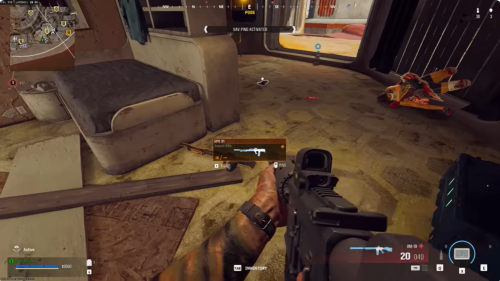 12 Pro Tips to Win More Warzone Fights (2026)Mar 19 at 08:46 PM•
 CasinosAnalyzer Improves Decision-Making Across All Casino CategoriesFeb 12 at 09:20 PM•
 What Football Predictions are Available on Livescore Sites?Jan 31 at 02:24 PM•Why I Quit Chasing Monster Parlays and Actually Started WinningMay 22 at 04:16 PM•How I Stopped Chasing Losses and Started Actually Winning at Sports BettingMay 21 at 09:46 AM•Why I Started Tracking My Bet Slips Like a Business ExpenseMay 21 at 09:31 AM•App, Mobisite, or Desktop: Which Access Method Actually Changes How You Bet on HollywoodbetsApr 17 at 08:59 AM•Top 7 Best Betting Strategy for Football SuccessApr 13 at 02:45 PM•How to Choose Reliable Online Betting Sites? 2026 GuideApr 9 at 04:17 PM•Under What Specific Circumstances Does Cashing Out Actually Make Mathematical Sense?Yesterday at 01:45 PM•12 Pro Tips to Win More Warzone Fights (2026)Mar 19 at 08:46 PM•CasinosAnalyzer Improves Decision-Making Across All Casino CategoriesFeb 12 at 09:20 PM•What Football Predictions are Available on Livescore Sites?Jan 31 at 02:24 PM•
Cash-out features have become one of the most visible tools in modern soccer betting online. They allow bettors to settle a bet before the match finishes, either securing a profit or reducing potential losses. At first glance, the option feels empowering because players can take control of the outcome instead of waiting for the final whistle. However, many analysts point out that cash-out offers are usually priced to favour the bookmaker.
The value presented to players is typically lower than the true probability of the remaining outcomes. Some industry analyses suggest that the bookmaker’s pricing advantage means the cash-out option benefits the operator in the majority of cases. In simple terms, the convenience of cashing out often comes at a cost. Despite that, there are specific circumstances where cashing out can make mathematical sense. Understanding those scenarios requires thinking carefully about probability, risk management, and how match conditions change.
To understand when cashing out is sensible, it helps to first understand why it is usually disadvantageous. Bookmakers calculate a live probability via prediction markets for the remaining outcome of your bet. They then offer a cash-out price slightly below the theoretical fair value. This margin ensures the bookmaker maintains a profit advantage regardless of the decision you make. Because of this built-in discount, cashing out frequently means accepting less value than letting the bet run. However, betting is not purely about theoretical value. Real-world uncertainty and bankroll considerations can change the equation.
One of the most serious situations where cashing out can make sense is when new information significantly changes the true probability of the outcome, but the bookmaker’s cash-out calculation has not fully adjusted yet. Football matches can change quickly due to injuries, red cards, tactical shifts, or weather conditions. For instance, if you backed a team to win and a key player suffers an injury that clearly weakens the team, the original probability behind your bet may no longer be accurate. If the cash-out offer still reflects the earlier assumptions, taking it may protect its value before the market fully corrects itself. However, if major changes occur, beware, as this can slow down websites, causing players to miss out on cashing out, especially during major events.
Another scenario where cashing out can make sense involves risk management, especially for larger bets or accumulator wagers. If you placed a multi-match accumulator that now depends on a single remaining match, the potential payout might be very large relative to the bettor’s normal stake size. Even if the expected value of letting the bet run is slightly higher, the risk of losing the entire return might be worse.
Cashing out partially or fully in this situation acts as a hedge. While the bookmaker still takes a margin, the bettor turns some uncertainty into a guaranteed return. From a strict expected-value perspective, this may not always be optimal, but from a bankroll management perspective, it can be justified.
Cash-out decisions can also become more rational when the market odds have changed dramatically compared with the original bet. For example, if you placed a wager before kickoff and the odds for that outcome have shortened considerably during the match, your ticket effectively holds value similar to a position in a financial market. Cashing out is similar to closing that position early.
In some cases, bettors may even compare the cash-out offer to the odds available in live markets. If the offer is reasonably close to the equivalent hedge available by placing an opposite bet, the decision may be more neutral than usual.
The most important rule when considering a cash-out is to compare the offered amount with the true probability of the bet winning. If the expected value of continuing the bet remains higher, letting it run is usually the better choice, mathematically speaking.
However, when new information changes the probabilities, when bankroll risk becomes significant, or when market conditions create unusual pricing, cashing out may be a rational decision. Never forget that the cash-out button is designed for convenience rather than optimal value. Bettors who understand when to use it selectively and when to ignore it can make more informed decisions.